You had the knee thing in March. Or the shoulder. Or a surgery, or a hospital stay, or a run of appointments that added up faster than you expected. Whatever it was, you have already spent your way past the...

Learn about common pain-causing health conditions, their progression paths, their causes, and effective treatment options. Our blog offers valuable information to people who experience pain and anyone who wishes to learn more about long-lasting, safe, and noninvasive treatments.
These articles also explain how Superior Physical Therapy addresses these common health problems through an innovative approach called the Superior Method. This approach aims to accurately identify the underlying cause of pain in order to develop a more tailored and collaborative treatment plan.
You had the knee thing in March. Or the shoulder. Or a surgery, or a hospital stay, or a run of appointments that added up faster than you expected. Whatever it was, you have already spent your way past the...
More walking will not rebuild hip strength after hip replacement. Research tracked an abductor deficit that starts before surgery and lingers for years.
New back pain after hip replacement is common enough that researchers measured it. One in five patients with no prior back pain had it within a year.
There is one question worth more than all the other questions to ask before hip replacement, and an orthopedic surgeon in Australia is the reason I ask it.
What a free movement assessment Traverse City patients get actually looks like, minute by minute, so the unknown stops being the reason you never call.
Hip and back pain together is not a coincidence. Half of patients heading for hip replacement already have back pain, and most of it clears after surgery.
Four hip self-test at home checks you can run this afternoon with a kitchen chair and a bed. What a poor score suggests, and what it does not prove.
Told you are bone on bone hip and stopped moving because of it? Two large studies found hip pain and hip x-rays agree far less often than anyone assumes.
A Norwegian trial followed 109 people for six years. Hip arthritis exercise pushed the median time to a hip replacement out by nearly two years.
Your surgery date is set. Prehab before hip replacement is the six weeks most people waste, and the research on strength and recovery says don't.
Roughly 40 percent of every walking cycle is spent balanced on one leg. If your single-leg stability isn't there after hip replacement, nothing feels safe — regardless of your range of motion.
Scar tissue forms in every hip replacement. Whether it restricts your recovery depends almost entirely on whether it's addressed during the 6-to-12 week remodeling window — and most PT programs miss it.
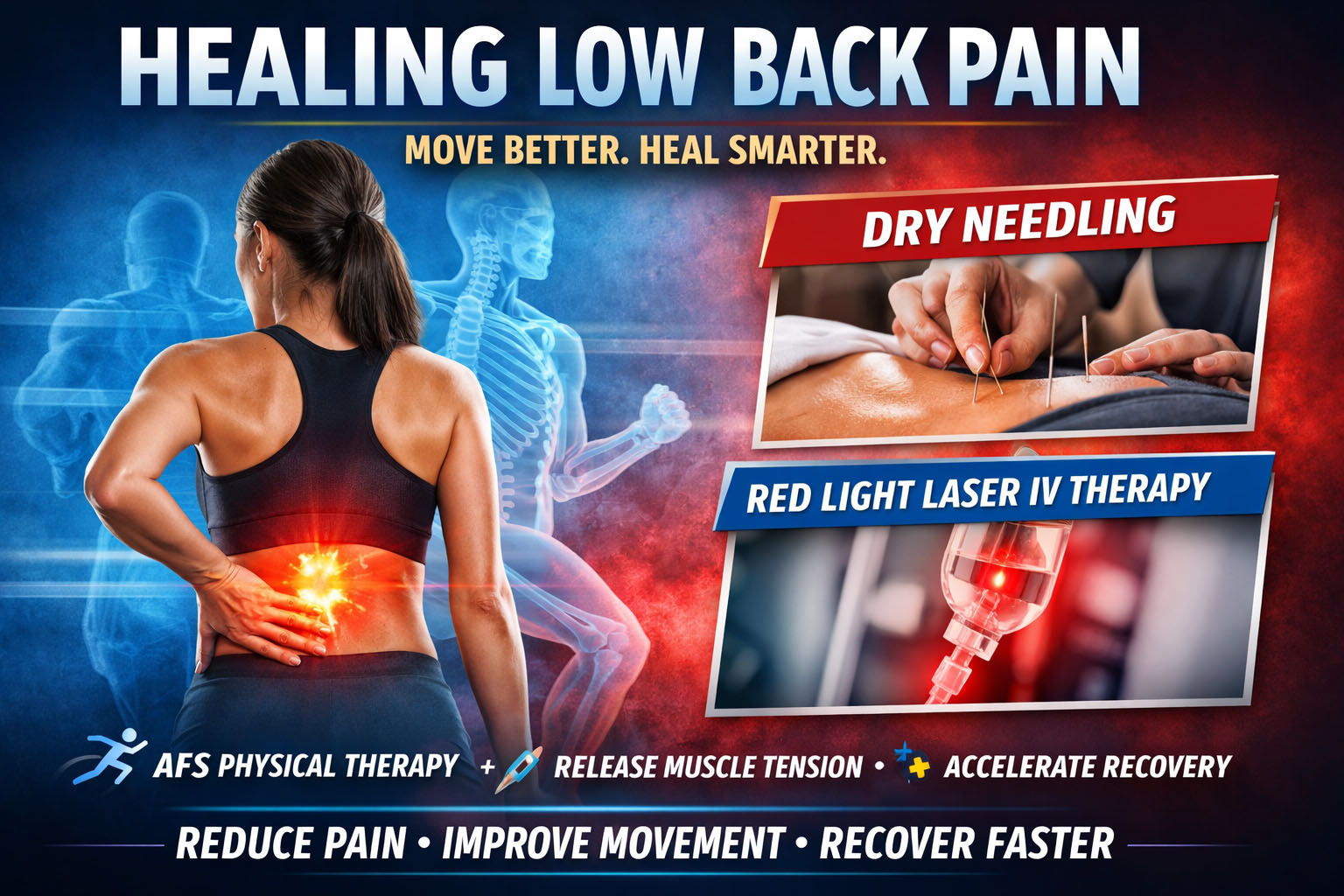
A Smarter Path Forward for Healing Low Back Pain Low back pain is rarely caused by a single problem—and it’s almost never solved by a single solution. Applied Functional Science (AFS) Physical Therapy focuses on understanding how the body...
You Don’t Have to Live with Stenosis Lower back pain comes in various forms, and one prevalent type is stenosis, derived from the Latin term for narrowing. Also known as arthritis, degenerative disc disease, or disc space narrowing, stenosis involves the...
Identify and Heal Sacroiliac Pain Lower back pain is a common ailment, and the second most prevalent form is known as sacroiliac pain or SI pain. Understanding the anatomy and symptoms of the sacroiliac joint (SI joint) can help...
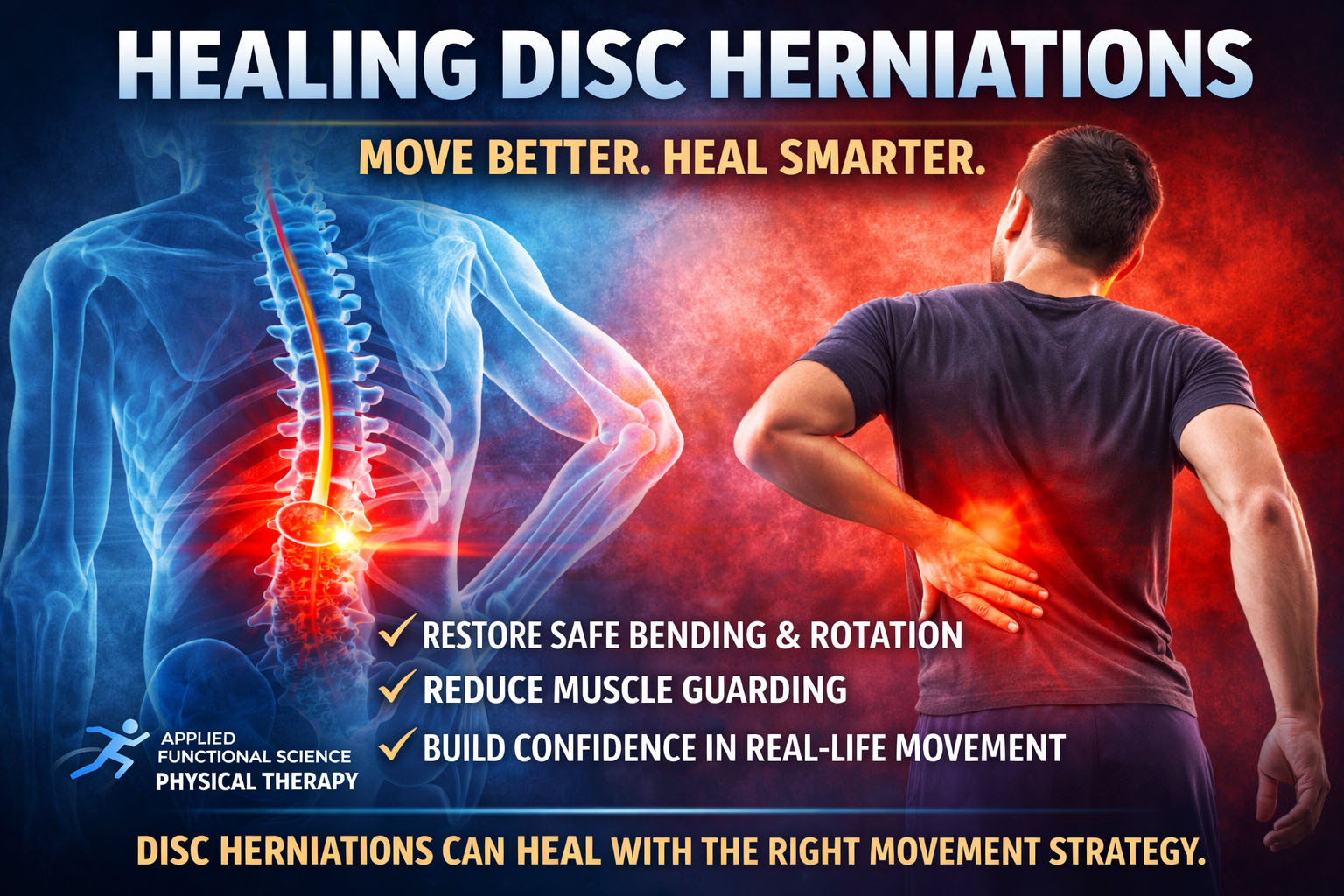
Healing Disc Herniations with Applied Functional Science Physical Therapy A disc herniation can sound frightening. Words like bulge, tear, or nerve compression often lead people to believe their spine is fragile or permanently damaged. But the truth is, many disc herniations heal successfully—especially...
Integrating Mind-Body Techniques into Back Pain Management Back pain is one of the most common reasons people seek medical help—and one of the most frustrating to manage, especially when it becomes chronic. Traditional physical therapy often focuses on strengthening...
Understanding the Biomechanics of Back Pain: A Physical Therapist's Perspective Back pain is one of the most frequent reasons people seek medical care, and it often seems to strike without warning—whether you're lifting something heavy, sitting too long, or...
The Role of Posture and Ergonomics in Preventing and Treating Back Pain Back pain has become a modern epidemic—especially in an age when so many of us spend hours sitting at desks, working on computers, or lounging with mobile...
Beyond the Basics: Innovative Physical Therapy Techniques for Chronic Back Pain Chronic back pain is one of the most common—and frustrating—conditions affecting adults today. Whether it stems from a past injury, poor posture, degenerative changes, or lifestyle factors, ongoing...
Back Pain Secrets Revealed Today we're going to talk about the fact that most of the things that people try to find relief for back pain are only altering the symptoms of pain. They don’t heal the body or provide...
Healing Disc Herniations with Applied Functional Science Physical Therapy Disc herniations are a common cause of back pain, often leaving patients feeling limited and desperate for solutions. While traditional treatments like surgery or medication focus primarily on symptoms, Applied...
In Defense of the Lower Back If ever presented with the chance to advocate for a body part in a legal setting, I would unequivocally choose to stand up for the lower back. In the realm of physical well-being, the...
Three-step Process to Resolving Back Pain This is an excerpt from Dr. Andrew Gorecki's very popular book, The Truth about Lower Back Pain. Visit https://www.lowbackbook.com/ to get your FREE copy! By far the most common treatments for lower back pain...