 (231) 944-6541
 West:
West: 
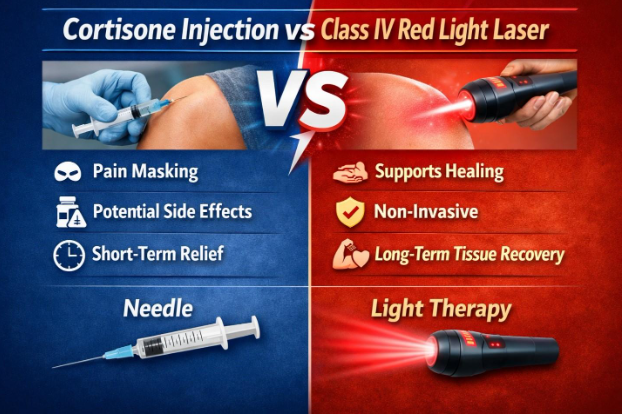
Cortisone Injections vs. Class IV Laser Therapy: Short-Term Relief with Long-Term Considerations
As a physical therapist, I often see patients struggling with persistent musculoskeletal pain—from knee osteoarthritis and tendinopathies to plantar fasciitis. Two common treatment options are cortisone (corticosteroid) injections and Class IV laser therapy (also known as high-power photobiomodulation). While both can help reduce pain and inflammation, research shows clear differences in their duration of benefits and safety profiles. Here's a breakdown based on current evidence to help you make informed decisions.
The Appeal (and Limitation) of Cortisone Injections
Cortisone injections are a go-to for quick relief because they effectively suppress inflammation. Studies consistently show they deliver moderate to significant short-term benefits:
- Pain reduction and improved function often peak in the first 4–12 weeks.
- For knee osteoarthritis, patients may see VAS pain score drops of 1–2 points and better mobility for up to 6 weeks.
- In tendinopathies (like tennis elbow or rotator cuff issues) or plantar fasciitis, they outperform placebo or no treatment initially.
However, these gains are typically temporary. Beyond 3 months, benefits often fade or even reverse compared to alternatives like physical therapy or other injectables. Systematic reviews and meta-analyses indicate:
- No sustained superiority in pain or function at 6–24 months.
- Recurrent injections may lead to worse long-term outcomes in some cases.
More concerning are the potential long-term risks, especially with repeated use:
- Local effects: Accelerated joint degeneration (e.g., cartilage thinning in knees), tendon weakening or rupture, subchondral fractures, osteonecrosis, and rapid destructive arthritis in hips or other joints.
- Systemic effects: Bone density loss (increasing osteoporosis and fracture risk in long-term users), adrenal suppression, blood sugar spikes (problematic for diabetics), hypertension, infection risk, and more.
- Guidelines urge caution with frequent injections due to these harms potentially outweighing benefits over time.
While some large studies find negligible long-term joint damage from occasional use, the consensus highlights risks that accumulate with repetition—making cortisone best as a short-term bridge rather than a repeated fix.
A Safer, Healing-Focused Alternative: Class IV Laser Therapy
Class IV laser therapy uses high-power red and near-infrared light to penetrate tissues deeply, triggering photobiomodulation—a process that boosts cellular energy (ATP production), increases blood flow, reduces inflammation, and promotes actual tissue repair.
It offers similar anti-inflammatory and pain-relieving effects to cortisone but with key advantages:
- Both interrupt pro-inflammatory pathways for comparable short-term relief (e.g., significant VAS reductions in plantar fasciitis or tendinopathy).
- Unlike cortisone (which suppresses inflammation but can inhibit healing), laser actively stimulates collagen production, cellular metabolism, and regeneration.
Evidence from comparisons (especially in plantar fasciitis) shows:
- Laser provides equivalent or better pain and function improvements.
- Benefits often last longer—up to 3 months or more—with less rebound worsening.
- In some studies, laser edges out injections for tenderness and patient preference at follow-up points.
The biggest win? Safety. Class IV laser is non-invasive and non-pharmacological:
- Minimal side effects: Temporary mild warmth, tingling, or redness at the site.
- No systemic risks like bone loss, hormonal disruption, or infection.
- Primary precaution: Protective eyewear during treatment.
- No reports of tissue damage or long-term complications when used properly.
This regenerative approach makes it particularly appealing for chronic conditions where healing matters more than temporary suppression.
Bottom Line: Weighing Your Options
Cortisone injections can be excellent for fast, short-term relief—think of them as a quick reset during a flare-up. But for lasting management, especially with repeated needs, the accumulating risks make them less ideal.
Class IV laser therapy matches or exceeds those short-term effects while promoting true healing and carrying far lower risk. It's a powerful, evidence-supported alternative that many patients prefer for its non-invasive nature and sustained results.
If you're dealing with ongoing pain, talk to your provider about both options. Combining therapies—like laser alongside targeted physical therapy—often yields the best outcomes. The goal isn't just quick relief; it's helping your body recover and stay strong long-term.
Check out the many benefits of Class IV Red Light Laser Therapy: Class IV Red Light Laser Therapy at Superior Physical Therapy | Superior Physical Therapy
Read a Review of the Scientific Research showing the benefits of Class IV Red Light Laser Therapy: (PDF) Efficacy of class IV laser in the management of musculoskeletal pain: A systematic review