 (231) 944-6541
 West:
West: 
A Movement Screen Can Keep You Pain Free
Pain rarely shows up out of nowhere.
Most aches, stiffness, and injuries are the final chapter of a much longer story—one that starts with small, often invisible movement limitations. A movement screen helps you read that story before it turns into pain.
Using principles from Applied Functional Science (AFS), a movement screen looks at how your body actually moves in real life—not just how strong or flexible you are in isolated positions. It’s a proactive, intelligent way to protect your body and stay active for years to come.
What Is a Movement Screen?
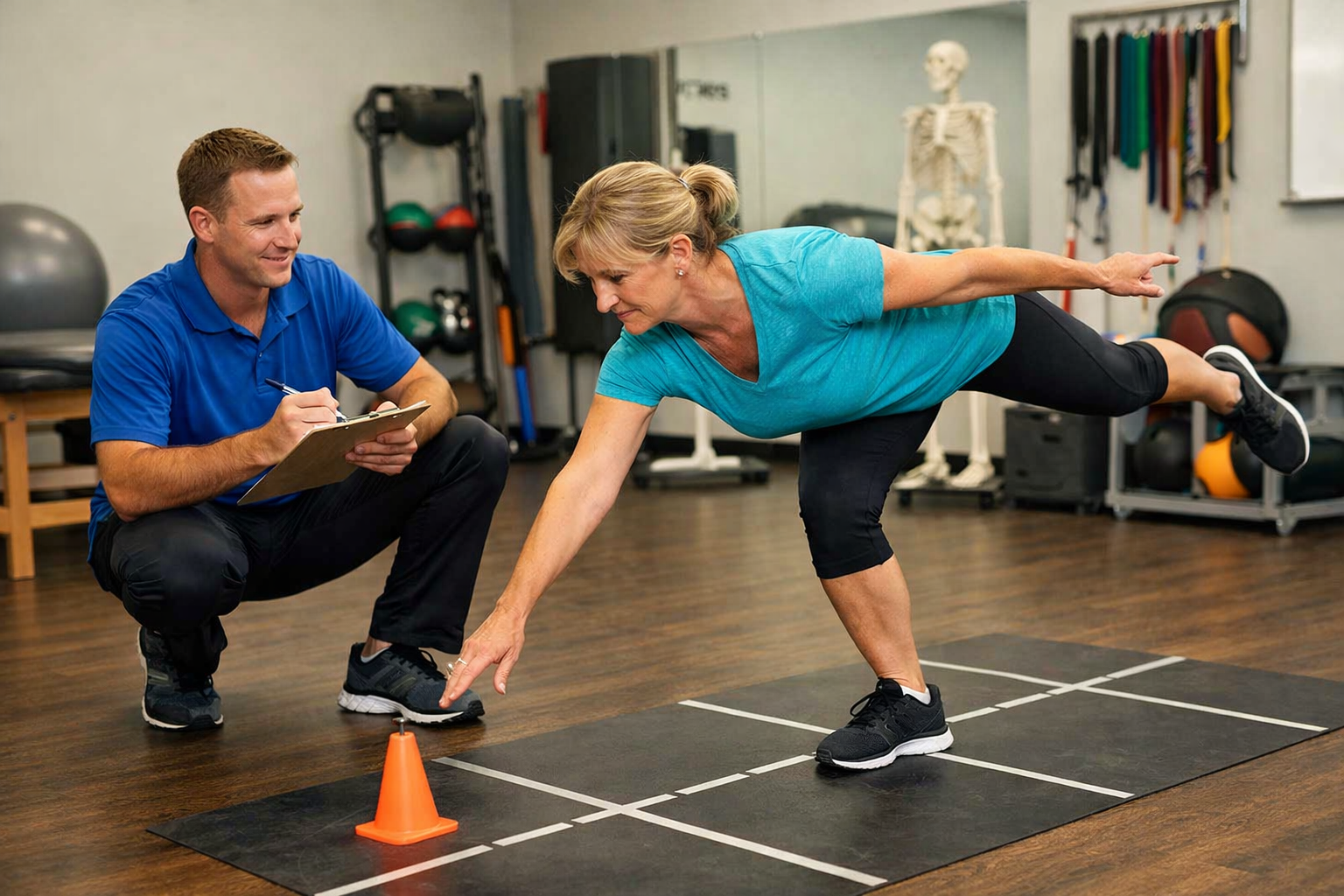
A movement screen is a guided assessment performed by a trained professional that evaluates how your body moves through essential patterns such as:
- Squatting
- Reaching
- Stepping
- Rotating
- Balancing
Instead of focusing on a single joint or muscle, the screen looks at the whole system working together—feet, hips, spine, shoulders, and nervous system—all in three dimensions.
This approach is rooted in Superior Physical Therapy’s Applied Functional Science philosophy, which recognizes that the body doesn’t move in straight lines or isolated parts. Real life happens in motion, across multiple planes, under changing loads.
Why Finding Limitations Early Matters
Most people wait until something hurts to seek care. By then, the body has already adapted—often poorly—to movement restrictions.
A movement screen helps identify:
- Asymmetries between left and right sides
- Loss of joint mobility or control
- Poor load transfer through the body
- Compensations that increase stress elsewhere
These limitations may not hurt yet, but they quietly increase wear and tear on tissues over time.
Pain is often a lagging indicator. Movement dysfunction usually comes first.
The Applied Functional Science Difference
Traditional assessments often happen on a table, in non-weight-bearing positions, and isolate one joint at a time.
An AFS-based movement screen:
- Is performed mostly in standing
- Uses real-world positions and forces
- Assesses how multiple joints work together
- Accounts for gravity, balance, and ground reaction forces
This allows clinicians to see how your body truly handles daily demands—walking, lifting, twisting, exercising, and working.
Benefits of a Movement Screen
1. Injury Prevention
By identifying risky movement patterns early, you can correct them before they overload tissues and lead to injury.
2. Pain Prevention
Addressing limitations before symptoms appear often prevents chronic pain from ever developing.
3. Better Performance
Efficient movement improves strength, endurance, balance, and coordination—whether you’re an athlete or just staying active.
4. Personalized Strategy
No two bodies move the same. A movement screen guides individualized exercises and strategies tailored to your specific needs.
5. Confidence in Movement
Knowing your body moves well—and understanding where to improve—builds confidence and reduces fear of activity.
Who Should Get a Movement Screen?
A movement screen isn’t just for people in pain. It’s especially valuable if you:
- Want to stay active as you age
- Sit or stand for long periods at work
- Exercise regularly
- Have a history of injuries
- Feel stiff, unbalanced, or “off” without clear pain
In short, if you move (and you do), a screen can help.
Movement Is Medicine—When It’s Done Well
Applied Functional Science teaches us that the body is adaptable, resilient, and incredibly intelligent—when movement is respected and guided properly.
A movement screen doesn’t label you as broken. It simply shows where your body needs support, mobility, or control to move better.
By addressing limitations early, you’re not just avoiding pain—you’re investing in long-term freedom of movement.
And that may be the most powerful form of prevention there is.
Check out more info on how a Movement Screen can help you here: Full Body Movement Assessment | Superior Physical Therapy
Sign up for a FREE assessment here: https://www.free-assessment.com/