
 (231) 944-6541
 West:
West: 
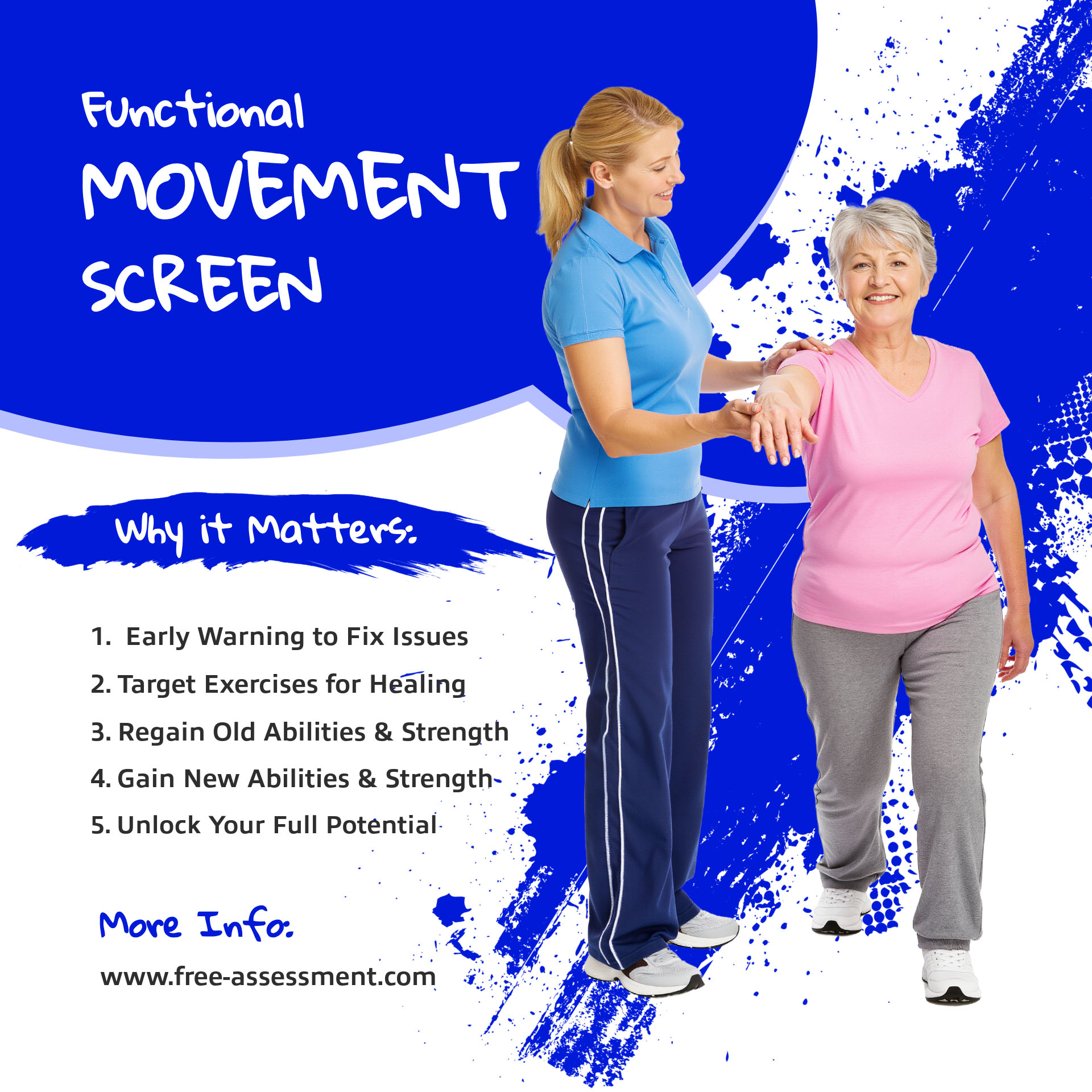
7 Movement Problems a Functional Movement Screen Reveals
We often go through life unconcerned about how well our body is moving, until pain stops us in our tracks. What if you could tell before your back, knee, or shoulder pain flared up that a problem was brewing? The Functional Movement Screen was designed to warn you by highlighting movement inefficiencies that could put you at risk for injury or limit your performance.
Through seven simple movement patterns, the Functional Movement Screen acts like an X-ray of your movement quality. And often, it uncovers issues you didn’t even know you had. Here are seven common movement limitations the Functional Movement Screen can reveal—and why they matter in both fitness and everyday life.
1. Limited Hip Mobility
When your hips don’t move well, your body borrows motion from your lower back or knees. This can contribute to back pain, knee strain, or difficulty with activities like walking, running and squatting.
2. Poor Ankle Mobility
Stiff ankles can make deep squats (like when you get down to lift a heavy item) feel impossible and alter your walking or running gait. Over time, this limitation increases the stress on your knees, hips, and even your lower back.
3. Restricted Shoulder Mobility
Shoulder tightness is common in people who sit for long periods or focus heavily on pressing exercises. Limited mobility here can increase the risk of impingement, rotator cuff issues, and poor overhead lifting mechanics.
4. Core Instability
If your core isn’t doing its job to stabilize your spine, other muscles step in to compensate. This often results in inefficient movement patterns, decreased strength, and a greater chance of lower back injury.
5. Poor Balance and Single-Leg Stability
Balance is more than standing on one foot—it’s about how your body stabilizes during movement. Weakness here can affect running efficiency, agility, and even simple tasks like walking up stairs.
6. Limited Thoracic Spine Mobility
The upper back should rotate and extend freely, but modern life (think computers and phones) often leads to stiffness. This lack of mobility can create compensations in the shoulders or lower back, leading to pain or injury.
7. Asymmetries Between Left and Right
One of the most valuable insights from the Functional Movement Screen is uncovering differences between the left and right sides of the body. These asymmetries often fly under the radar but can set the stage for imbalances, overuse injuries, and performance plateaus.
Why It Matters
Each of these limitations is like a warning light on your car dashboard. You can ignore them, but eventually, something will break down. By identifying these issues early, the Functional Movement Screen gives you the chance to correct them with targeted exercises—helping you move more efficiently, reduce injury risk, and unlock your full potential.
The Bottom Line
The Functional Movement Screen isn’t about passing or failing. It’s about awareness. By shining a light on where your movement could improve, the Functional Movement Screen helps you take proactive steps toward safer, stronger, and more effective training.
So next time you think about hitting a new personal best, ask yourself first: Am I moving well enough to support the journey?
Schedule your FREE Functional Movement Screen at Superior Physical Therapy in Traverse City, MI by clicking here: https://www.free-assessment.com
Learn more about our Full Body Movement Screening here: Full Body Movement Assessment | Superior Physical Therapy