Free guide · Written in Traverse City
The free Consumer's Awareness Guide to Back Pain Treatment. Sixteen plain English pages on what works, what does not, and how to tell the difference before you pay for it.
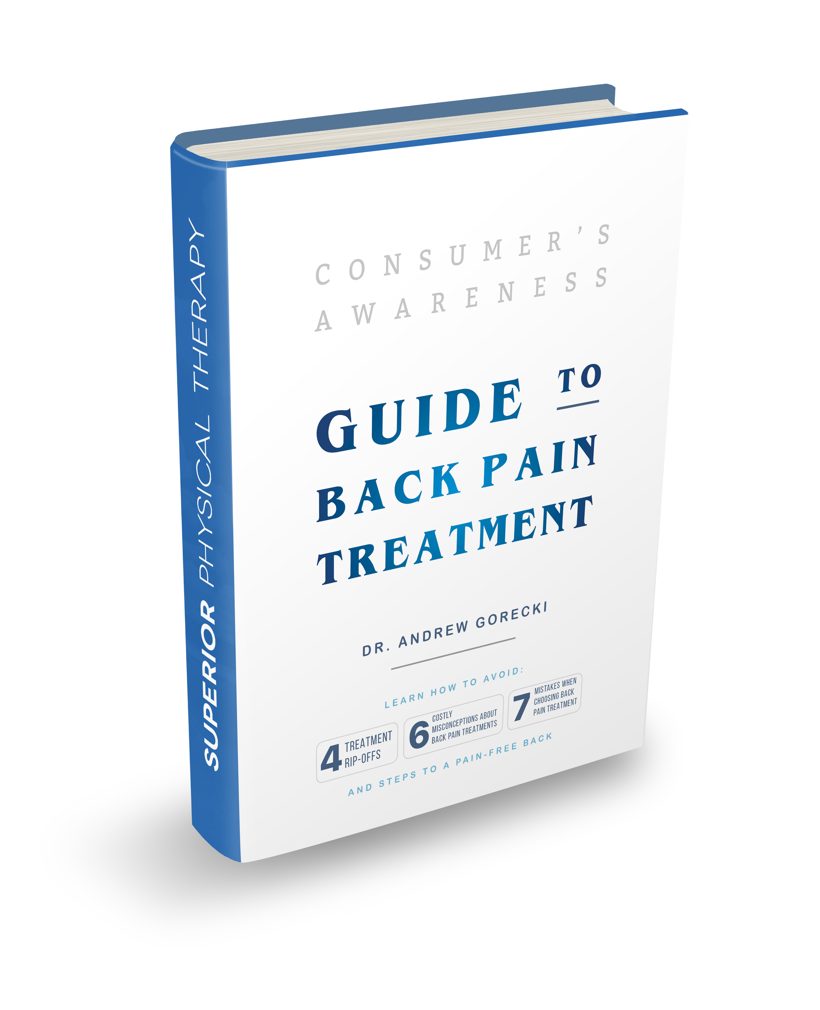
Instant download on the next page. We email you a copy too. No cost, and no card.
Choosing back pain treatment is harder than it should be. You get ads that promise a fix in one visit, a referral you did not choose, and a scan report full of words nobody explained. Most people end up deciding on whatever was closest or first.
This guide is the version I wish someone had handed me when my own back went. It tells you what the research says about the common options, and what to ask before you agree to any of them.
Your scan report probably lists things like disc degeneration, bulges or bone spurs. Here is what the guide shows. A Mayo Clinic review of people with no back pain at all found the same findings everywhere.
Source: Brinjikji W, et al. American Journal of Neuroradiology, 2015. Full table in the guide.
So the picture rarely tells you why your back hurts. That is why the guide spends its last section on finding the cause.

Andrew founded Superior Physical Therapy in Traverse City and is a Fellow of Applied Functional Science. He is also a former back pain patient. A herniated disc in his twenties sent him through a year and a half of treatment that never held. What finally worked was finding out why his back was taking the load in the first place.
He wrote The Truth About Lower Back Pain: The Hidden Culprits and has given more than 400 talks to people dealing with back pain.
Is it really free?
Yes. No card, no shipping, nothing to buy. You download it on the next page.
Will someone call me?
Someone from our office may call once to see if you have questions. If you would rather they did not, say so and that is the end of it.
Do I need a referral?
No. Michigan lets you see a physical therapist directly. You do not need your doctor's permission to read a guide or to ask us a question.
Do you take my insurance?
We accept Medicare, Priority Health, Blue Cross Blue Shield, Blue Care Network and most other major plans. Call (231) 944-6541 and we will check your coverage before you ever come in.
Sixteen pages. About twenty minutes. Free.
Send Me the Free Guide